I’ve got a pair of partial transcripts. There’s a certain amount of overlap, and if you listen to the full presentations there’s even more. It’s all mostly related to Iran and China, but from somewhat different perspectives. I’ve taken a very brief excerpt from Mac’s remarks to Judge Nap regarding JD Vance. In the past, while acknowledging Robert Barnes’ entertainment value and his genuinely insightful remarks, I’ve expressed skepticism regarding Barnes’ claims that Veep Vance walks around the White House wearing a white hat. For a guy who got where he is by hanging out with a certifiable creep like Peter Thiel, that’s pretty hard to buy into. Moreover, there have been multiple reports about how Vance spends most of his time doing fundraising with the usual Jewish Nationalist Big Money suspects. You know that he’s not apologizing to them for Trump’s big mistake. So here we go with Mac. So this is useful just in terms of getting the lay of the land in a political sense, going forward:
Judge: You refer to [Trump] as surrounded by a bubble. It’s a bubble of sycopants. I mean, we keep hearing these stories that General Caine—the chair of the Joint Chiefs of Staff—and the Vice President might not have been part of the sycophant group and might have expressed opinions to [Trump] contrary to what he got from Secretary Rubio, Secretary Hegseth and the others. I don’t need to mention all of their ...
Mac: Well, actually, Judge, I spoke over the weekend to some people in the White House and they said the opposite. There was no one more enthusiastic about going to war with Iran than JD Vance. And that’s my own experience with him. I saw this up close and personal. He was always talking about going to war with Iran. So I don’t believe [the Barnes narrative].
Judge: That’s consistent with his financial benefactors, Peter Thiel and Palantir and people that make a fortune on these wars.
Mac: And when it comes to Caine, you know, we’ve discussed that before. He was not appointed and made a fourstar to say no. And he’s an airman. And I think like most airmen, he was more than willing to give it a go because they thought this might be another opportunity to win a war with air power only. Of course, that’s nonsense, as we both know. But nevertheless, I’m very skeptical of these attempts to retrospectively confer a degree of credibility and character on these people when I didn’t see much evidence for it to begin with.
Judge: I guess I have fallen a little bit to the PR view that Vance has thought of himself as the loyal soldier but the dissenter up to the point of the decision to go in. But I accept very much what you said.
Mac: Before we before we leave this topic completely, I think it’s worth pointing out that right now—behind the scenes, at least—I’m being told this, that the argument is that President Trump was misled by his quote unquote Israeli friends and that had he paid more attention to his American advisers, the narrative goes, then events might have taken a different course. But the truth is, there is a mountain of evidence that--like President Lyndon Johnson--Trump and his inner circle, including Vance, were really driving military action and escalation from the beginning. And Trump seems to have rejected advice from anyone in or out of uniform who opposed it. But very few people that opposed what he wanted to do ever got to the White House, if any. And I think that’s your point on the bubble.
...
Judge: So, Colonel, have your friends in the White House expressed a view as to what Trump will do and who will he blame? Will he blame Hegseth? Will he blame General Caine? Will he blame the Israelis? He’s certainly got not going to take blame himself. If he does, it’ll be the first time in his adult life.
Yeah. Well, that’s a good question and I don’t have a good answer to it, except to point out that there are a lot of people who are blaming the Israelis behind closed doors, but they’re all afraid to say so publicly. And I think part of that is that they don’t want to admit that the Israelis have led us down the the path to destruction eagerly. And in fact, Prime Minister Netanyahu spoke quite recently, just a few hours ago, as I understand it, saying that the war is not over. and it must continue. And I think that’s what he wants. He doesn’t care what it costs us. He doesn’t care what it costs the world. He doesn’t care how many people starve in the Global South. He doesn’t care whether or not inflation is going to destroy us along with large numbers of governments all over the world. It’s irrelevant to him. He wants complete dominance, control, hegemony over the Middle East. The only way he can get it is with us. So I think, unfortunately, Trump can’t blame it on the Israelis, whether he likes it or not. He’s going to be held responsible.
I’ve edited the Sean Foo transcript to focus on what I take to be Foo’s main points. His overarching contention is that Iran is actively seeking to prolong the war because of the damage this will do to the US economy and Trump and the war party politically. We’ve seen this argument before, and the Iranians have shown themselves to be quite savvy in the world of finance. Foo’s second, and related, contention is that this dynamic has robbed Trump of any leverage he might have had for his trip to China. He seconds what my view has always been, that this trip was always planned as occurring in the aftermath of a glorious victory over, first, Venezuela and, then, Iran. Instead, Trump will show up in the Forbidden City after a humiliating defeat and hat in hand. Anything in the way of deals that Xi gives Trump will be very much to China’s benefit.
Place Foo’s argument in the latest context. Trump is complaining about the Iranian delaying tactics. So maybe he gets what’s going on, but there’s nothing he can do—short of abject surrender—to change the situation. So he continues with his yackety yack.
By the way, regarding Trump being in possession of any “cards”, Mac suggested that they were baseball cards. Anyway:
At this point, Trump is gambling with the entire US economy, markets, and global hegemony with this war. One really wonders if he’s aware how bad the situation is becoming. It’s not just draining the US of money and treasure. It’s not just draining away the stock piles of weapons. It’s putting Trump in a horrific bargaining position with the Chinese. [Trump’s original] plan was to shock the Chinese by pulling up a scorecard of wins. Trump wanted to go in and tell Beijing, “We have got Venezuela and we took down Iran. It’s time for you to listen and give us what we want.” But it’s not going to happen. In fact, it will just be a humiliation ritual after what is happening right now. Trump has called the Iranian response totally unacceptable, and he’s threatening Iran with brimstone and fire. He says the ceasefire is on life support, and that the Iranians won’t be laughing any longer. What’s funny is that Trump is probably going to hold back on any big strikes on Iran until after the China summit. The US economy can’t afford to piss off the Chinese, especially since the disruption of Middle Eastern oil supply to China is raising prices for them and it puts Chinese investments in that region at risk.
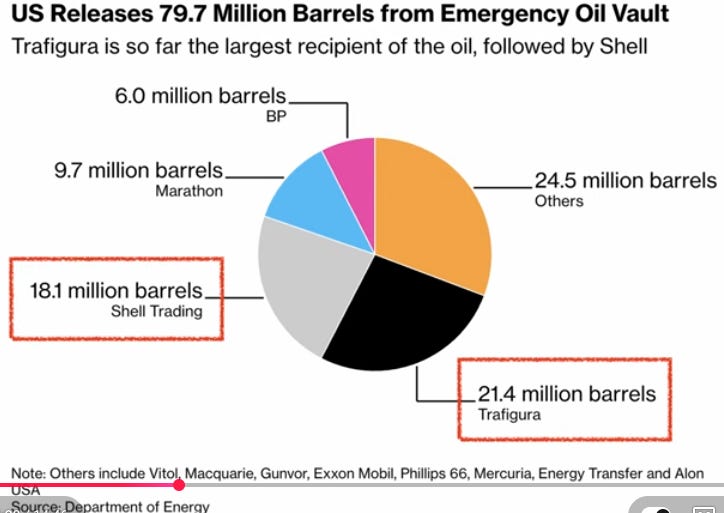
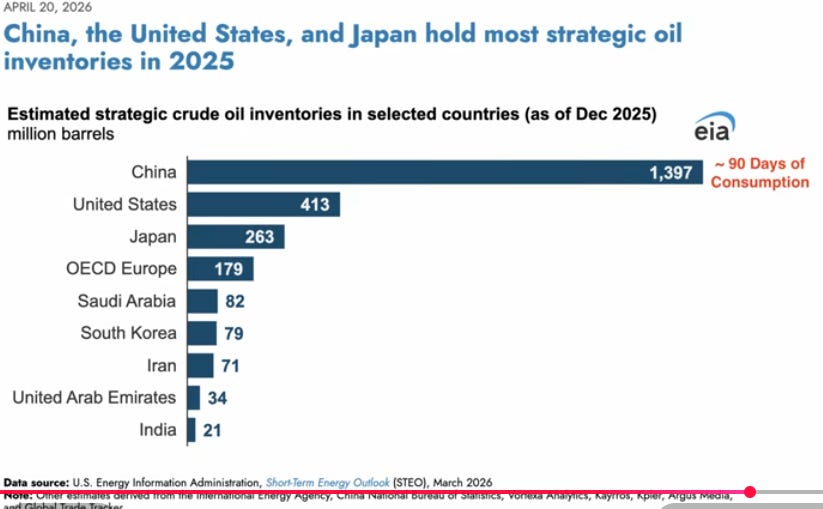
There are a whole lot of reasons why Iran isn’t folding. Apart from the risk of giving up nuclear deterrence, Iran also understands the pressure they can apply on the US economy. We’re talking about igniting a bigger oil crisis globally that will eventually boomerang back on the US. We are over 70 days into this war and counting. And if global prices start to spike, there’s simply no way that energy in the US won’t rise as well. Oil is a global market and there’s simply nowhere left to hide. World oil buffers are getting drawn down like never before. Assuming there’s no resolution to the war, we have at most 4 months before we hit critical levels. There might be over 8 billion barrels in reserves, but there’s a limit to how much you can actually draw them down. The US also has a limited amount of oil reserves. Trump is draining a total of 170 million barrels over a few months. After that, he might need to drain even more to keep prices stable. It’s probably not going to work this time because what the US sells will be snapped up and the buyers aren’t exactly who you think.
When the US releases their oil reserves to the world, it’s done through an auction. They don’t sell it directly to countries through a contract. The Department of Energy (DOE) issues a notice of sale and buyers turn up and bid. Two of the biggest buyers of the US oil reserves are trading companies. Shell’s trading division snapped up 80 million barrels while Trafigura bought over 21 million barrels. Other traders like Gunvor and Mercuria also bought cargos from the US government.
These are some of the biggest trading houses in the world, and traders are extremely ruthless. They have the ability and the economies of scale to buy and sit on their positions. They will be buying low and selling high. And if enough barrels are [squirreled?] away, the physical price of oil might go even higher. Then the oil crisis facing the world could get worse, while traders make billions. This is called arbitrage and it’s literally the business model of middlemen. So the incentives for lower oil prices are just not there. imagine if global oil buffers collapse further and the US releases more oil reserves. Prices won’t suddenly drop. It doesn’t work that way. In fact, the physical price could rise higher if these traders play their cards right. Consumers probably are going to pay more. All this is going to put upwards pressure on the US economy as well. There’s no escaping it.
Iran is definitely taking note, and China isn’t blind to that as well. Higher energy prices are especially destabilizing to the US economy. It also adds pressure to the entire financial system. The higher oil prices go, it forces the Fed to keep rates high. It’s not good for a stock market that’s overheating. It’s not good for mortgage rates. They’re rising higher. It stacks risk on top of additional risk in a system that’s already very, very vulnerable. The Iranians have their hands on the lever of US inflation. And the impact goes beyond just companies investing their money. Consumers are also going to get clobbered.
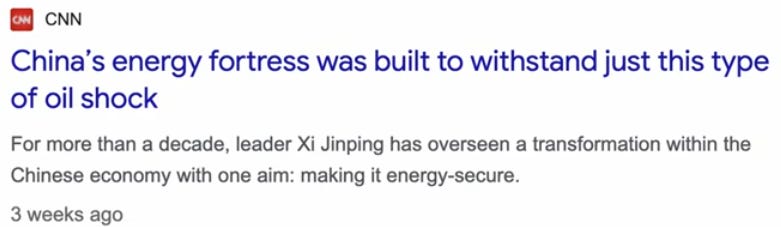
The Trump administration is going to face a really tough sell in China. Trump is going to bring with him a star studded delegation to basically beg business from the Chinese. We know some of the attendees: Nvidia, Citi Bank, and Blackstone are all attending. But US consumer giants like Apple and Tesla are also part of the delegation. They’re scrambling to China to maintain their markets. Trump is heading to China with zero leverage. In fact, he’s going there with negative leverage, because there’s nothing that the Chinese want, but there’s definitely concessions that Washington wants from President Xi. The most likely stuff that comes to mind would be buying US energy, buying US food exports like soybeans, and of course buying Boeing airplanes. It’s the same page year after year, but the desperation is growing year after year. Trump needs to bring home a big win from the China summit. And since the start of the war, many experts have been [gleefully predicting] the end of China’s economy, thanks to China’s reliance on Middle Eastern energy. But now the mainstream media is starting to admit what we have all known all along. China’s energy fortress was built to withstand just this type of oil shock. The Chinese economy is well insulated.
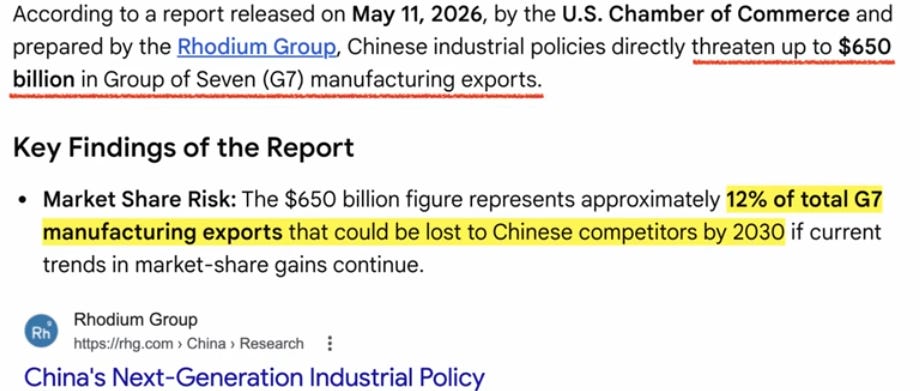
There’s no leverage to be had against Beijing, not against their oil reserves. It’s going to be really tough for Trump to arm twist China on anything. If Beijing decides to shut off rare earths, there goes the ability to make weapons and even AI chips. Trump can’t have that. If the Chinese decide to U-turn on buying US soybeans, there goes the American farmer. Imagine getting through the fertilizer crisis without Chinese demand. It won’t be pretty. China’s industrial policy is working so well that the US Chamber of Commerce is now afraid. They have a new report that warns of how much manufacturing exports will be lost from the G7 economies to China.
And should things continue to get worse, China could threaten up to $650 billion in industrial exports. That’s 12% of total G7 manufacturing value that could get lost by 2030. So this is a sobering moment.
The longer the war lasts with Iran, the longer it will be for the US to correct course. In fact, it might already be too late. The only question we have left now is how bad the situation will get. As it stands, Trump is not heading to the summit with a full deck of cards. Trump will be playing checkers with himself while the Chinese sip jasmine tea, wondering: What is really going on here?
Thanks for reading Meaning In History! Subscribe for free to receive new posts and support my work.
I watched Robert Pape with Mario Nawfal yesterday. Pape hammered down on the reference Foo makes to Trump's trip to Beijing as a "humilitation ritual". As he has in the past, Pape states that Iran intends to keep this war going for up to several more months to inflict economic damage on the US and max political humiliation--Pape uses the H word emphatically--on Trump. Not simply out of vindictiveness but for self defense and deterrence.
The fun part about oil reserves is that they don't just go one way. If or when the situation eases, they have to be refilled, which is going to keep prices up.
We're getting the first taste with an April CPI of 3.8, which has driven the 30y back over 5% again. If the Fed runs high rates into a supply shock, they'll set leverage up for more stress, if they cut into it, they get even more rampant inflation. They can't do nothing either, since it'll destroy the bonds market, depending how long it goes. Yield curve control starts looking better every day.
Everything kind of works till it doesn't. Time to see who blinks first, and be kind to your neighbours.

I watched Robert Pape with Mario Nawfal yesterday. Pape hammered down on the reference Foo makes to Trump's trip to Beijing as a "humilitation ritual". As he has in the past, Pape states that Iran intends to keep this war going for up to several more months to inflict economic damage on the US and max political humiliation--Pape uses the H word emphatically--on Trump. Not simply out of vindictiveness but for self defense and deterrence.
The fun part about oil reserves is that they don't just go one way. If or when the situation eases, they have to be refilled, which is going to keep prices up.
We're getting the first taste with an April CPI of 3.8, which has driven the 30y back over 5% again. If the Fed runs high rates into a supply shock, they'll set leverage up for more stress, if they cut into it, they get even more rampant inflation. They can't do nothing either, since it'll destroy the bonds market, depending how long it goes. Yield curve control starts looking better every day.
Everything kind of works till it doesn't. Time to see who blinks first, and be kind to your neighbours.